Ibrahim Mahama takes over the entire Fondation Cartier building in Paris with 'The Harvest Season,' his most ambitious exhibition to dateretrospective · Value · 18 Oct 2026
The art market has a tell.
Egon reads it for you: what a work actually is, where the market has it, and how to get it — the advisor you deserve.
Artist
Aesthetic neighbors
Latest result
Five axes
What Egon does
One work, read end to endBring Egon an artist or a work — or ask it to bring you one. It reads sales records, the gallery and museum standing, and the picture itself, then returns a judgment you can act on.
Here is one: a painting hanging in the home of Egon’s founder, bought on Egon’s read — and the core of what Egon found in it.
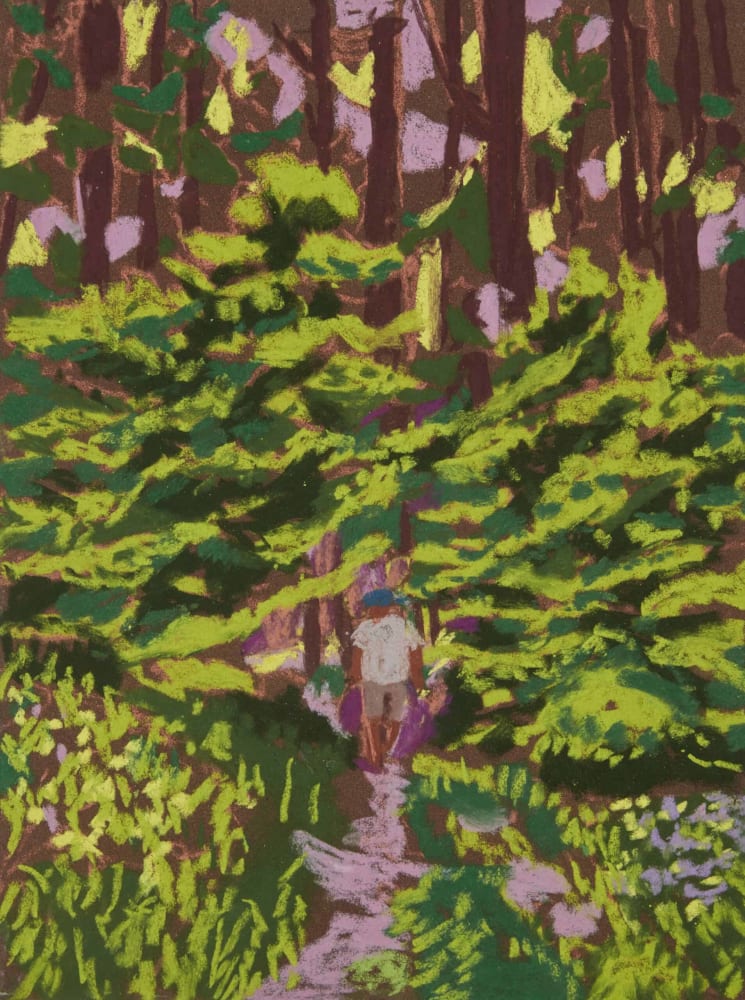
© Nicole Wittenberg · from the collection of Egon’s founder, bought on Egon’s read, August 2025
The record
Seven lots on record since 2025 — the market is still mostly in the gallery. Every sold lot has landed between $15k and $32k with premium; the high is a Christie’s Hong Kong result of HKD 252,000, about $32,000. The most recent — Grassy Shore, June 2026 — cleared a $13,160–$19,740 estimate to realise $30,084 with premium.
The standing
Held by the Guggenheim, the Albertina, the MFA Boston and the High. Acquavella since 2022, with Massimo De Carlo in Europe. Serious national standing that the market hasn’t caught up to yet.
The work
Her hand is acid colour and broad gesture — Maine landscape by way of Fauvism, the largest canvases painted with a broom. This one is the quiet end of it: a hand-sized pastel worked on site, the kind of study the big oils are built from.
Returns
VerdictBuy at target · confidence 7/10
Target $15,000 for a pastel this size. Maximum bid $18,000.
Target $15,000 for a pastel this size. Maximum bid $18,000.
The reads
Institutional6
Momentum8
Thesis fit6
Liquidity4
In shortReal institutional standing the secondary market hasn’t priced. Seven lots in eighteen months isn’t a market you can sell into on demand — buy on a five-year view.
Every judgment is made through the lens of that user's taste, collection and budget.
Artist analysis
Deep research on any artist — auction record, shows, representation, press — rendered to a verdict, a price and a fit.
Artwork evaluation
A specific work, judged: upload a photo or paste the lot, and Egon weighs the image, the comparables and the premium.
Opportunity scans
Ask for a scan and Egon returns artists that fit your taste and budget — each with the reason it surfaced.
Acquisition intelligence
How the work is actually got: which gallery holds it, how to approach them, what to pay, and when waiting is the right move.
Visual search
Show Egon works you love and it finds their kin — the artists working the same territory.
Collection management
Allocation, concentration, gaps and hold/sell guidance — every holding valued and documented for insurance and tax.
It starts with taste
First conversationYour first conversation with Egon is about art you love. You don’t need the vocabulary. You show Egon works that stay with you and say what you notice; Egon shows you more, side by side, and keeps asking until it can put your taste into words.
Everything it writes down keeps its source: something you said, something it saw in a work you showed it, or a question you haven’t settled. When what you research and buy starts to drift from what you told it, Egon notices and offers to revise your profile.
Every verdict, price and introduction after that is measured against your profile.
One first session, condensedThe collector’s words are verbatim
01A short form
Goals, taste and budget.
Chosen on the form
- Painting
- Works on paper
- Impressionism
- Modern
- Contemporary
- Bold color palettes
- Emotional resonance
Works you love, with your notes
I love how flat this painting is.
1Color is a huge factor in my choices.
2Color story, especially the unsettling green of both this and two other paintings I chose.
3Again the unsettling color choice and the dark background.
4
02A conversation with Egon
Works side by side, and what you make of them.

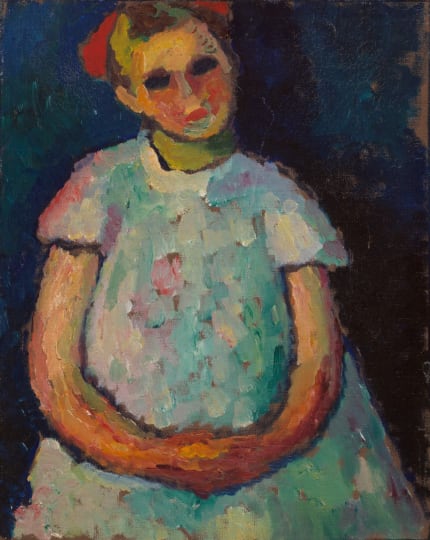
I prefer B. The eyes appear black and eerie.
5

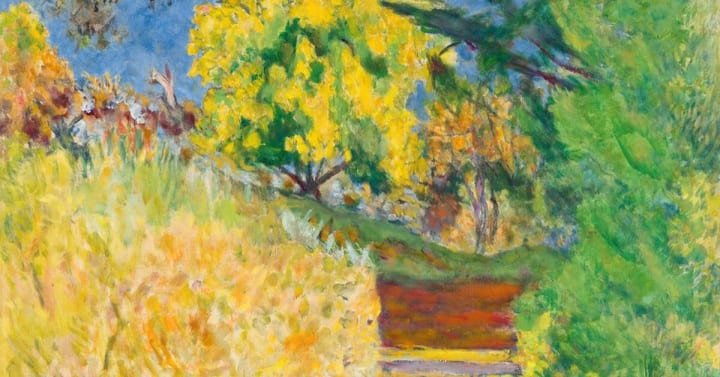
Neither speaks to me
6
On early modern or contemporary paintersBoth, if the faces keep that eeriness
7
03Your collector profile
A direction for your collection.
Collection theme
Quiet Figures, Eerie Faces, Unsettling Color
This collection is about still, quiet figures held under pressure by intense, unnatural color.
You said
Seen in your works · inferred, and marked that way
Still open
How you want to collect
Painting at the centre, works on paper for their closer scale. Early modern and contemporary. Built to keep, on a horizon of ten years and more.
From a first session in September 2026. Uploaded images appear as Egon’s generated tiles; the paired works are from Egon’s corpus.
Art advice with the whole picture.
Follow a hunch. Find a new direction. Put a decision in motion. Egon picks up the thread and does the work with you.
A conversation in motionIllustrative sequence
Ask Egon
Research desk
Your art. Your next question.
Example conversation ·
And it travels.
Our iOS app puts the same advisor in your pocket — at the fair, in the viewing room, on the phone from the saleroom.
Signals
Latest briefing · 18 Oct 2026 · 7 articles readEach morning Egon reads the art press and extracts what moves markets — records, gallery moves, museum acquisitions, estates. The latest briefing:
No briefing today — the press was quiet. The latest is below.
Ibrahim Mahama has had the kind of year most artists get once in a career, and now he has a whole building: 'The Harvest Season' takes over the entire Fondation Cartier in Paris and is billed as his most ambitious exhibition to date. It follows the top spot on the 2025 ArtReview Power 100, an Art Basel Gold Award, the 2026 Arnold Bode Prize and the rank of chevalier in France's Ordre des Arts et des Lettres. Mahama continues to put the money from his sales into institutions he founds in Ghana, from Red Clay Studio in Tamale to a glass-factory project in Aboso that Fondation Cartier is funding. In London, 1-54 is launching 'West Wind,' a new African modernism section curated by Nancy Dantas, aimed at the gap Sotheby's left when it closed its dedicated department in 2025.
Ibrahim Mahama's takeover of the entire Fondation Cartier building in Paris caps a run that also put him at No. 1 on the 2025 ArtReview Power 100 and brought him the 2026 Arnold Bode Prize.
Mahama tops the ArtReview Power 100, wins the Art Basel Gold Award and the 2026 Arnold Bode Prize, and is named a chevalier of the Ordre des Arts et des Lettresartist milestone · Value · 18 Oct 2026
1-54 London launches 'West Wind,' an African modernism section curated by Nancy Dantas, after Sotheby's closed its dedicated department in 2025market shift · Value · 18 Oct 2026
Mahama channels sales proceeds into Red Clay Studio, the Savannah Centre for Contemporary Art, Nkrumah Voli-ni and the Cartier-funded Aboso Glass Factory in Ghanamarket shift · Value · 18 Oct 2026
Members get this in their inbox most mornings. It’s not a newsletter running beside the product — these are the same signals Egon reads when it judges an artist, which is why a museum acquisition or a record result shows up in a verdict rather than only in a feed.
Read the latest briefing →
Published most mornings
The Egon 100
01 Oct 2026 · showing 10 of 100Egon's public index — one hundred artists, re-ranked monthly on the strength of the analysis: auction results, institutional momentum, collector demand.
01
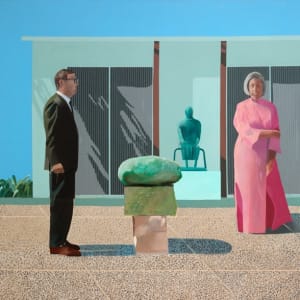


David Hockney
American Collectors (Fred and Marcia Weisman)
BLUE-CHIP75.7
02
▲1
Louis Fratino
Works for Sale (September 2023 Lot)
GROWTH75.1
03
▲2
Henri Matisse
The Joy of Life (Le Bonheur de vivre)
BLUE-CHIP72.9
04
Yu Nishimura
Artwork by Yu Nishimura
GROWTH72.6
05
▲2
Gerhard Richter
Helen
BLUE-CHIP72.5
06
Jean-Michel Basquiat
Untitled, From Leonardo
BLUE-CHIP72.0
07
▲7
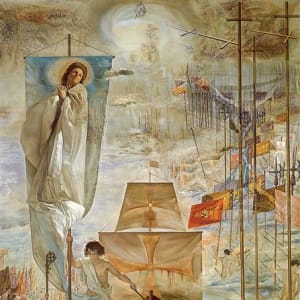
Salvador Dalí
The Discovery of America by Christopher Columbus
BLUE-CHIP71.2
08
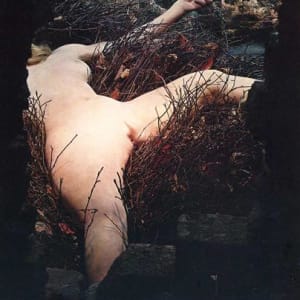
Marcel Duchamp
Given: 1. The Waterfall, 2. The Illuminating Gas
BLUE-CHIP70.9
09
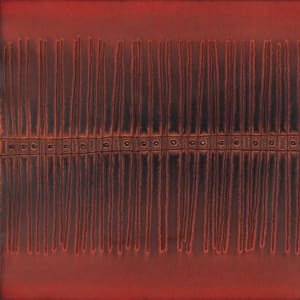
Sohan Qadri
Agamas
GROWTH70.0
10
▲1
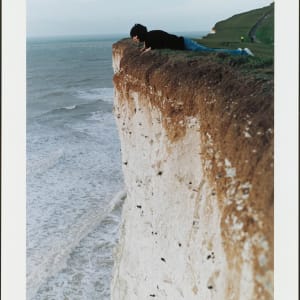
Wolfgang Tillmans
end of land I
BLUE-CHIP69.8
Method
Why, then howA database will tell you what a work sold for, but nothing about whether you should have wanted it. A marketplace will tell you what it would like you to want. A third kind of platform will sell you a fractional share of a painting you will never interact with.
Egon is something different — an advisor that thinks like a connoisseur and analyzes like a quant.
It weighs two things. The work — palette, gesture, edge, and the company it keeps among every artist Egon has studied. And the market — how easily it trades, what institutional weight sits behind it, what is left to discover, how much risk is already in the price. Neither is judged in the abstract: both are weighed against your collecting thesis, the works already on your walls, and what you have to spend.
They are weighed together, but every judgment shows you which read is doing the work, and where the two disagree. A beautiful thing with a thin market is still a thin market. A liquid name you would not want on your wall is still not for you.
Why Egon exists →
Read the essay behind the method
Who it's for
Collectors · Advisors · Partners
Collectors
Wherever you are in the journey.
Starting out
Begin with what you love. Egon helps you find your taste, set a sensible budget, and make a first acquisition you'll still be proud of in a decade.
Already collecting
Bring the collection you have. Egon maps its coherence and its gaps, keeps every holding valued and documented, and pressure-tests what's next.
Wealth advisors
Your clients’ art, advised like the rest of their wealth.
Some of your clients already collect. More would, if the advice existed at their level — don’t refer them out, give them the tools they need.
Galleries
Reach the collectors already researching your artists.
Egon doesn't sell art and takes no commission. Your inventory appears inside the research collectors are already doing — your name attached, your pricing yours.
Museums
Know what your top patrons actually care about.
Offer Egon as a benefit of membership; your development team sees aggregate cohort taste intelligence — never individual patron data.
Knowledge opens doors that wealth alone cannot.
Egon is in limited release.
Join the waitlist Try the live demo